Best Fungal Infection Remedies You Can Make at Home
Did you know that some common household items can effectively combat fungal infections? Many people overlook these simple solutions, opting instead for over-the-counter medications. However, you can harness the power of natural remedies right from your kitchen cabinet. From tea tree oil to garlic paste, several options can provide relief and promote healing. Let’s explore these treatments and how you can easily incorporate them into your routine.
Tea Tree Oil Treatment
Tea tree oil is a powerful natural remedy for fungal infections, offering potent antifungal properties that can help clear up various skin issues.
You can apply it directly to affected areas to combat fungal and bacterial growth. Regular use may not only alleviate symptoms but also promote healthier skin.
Embrace this natural cure as part of your routine for effectively addressing fungal concerns.
Garlic Paste Application
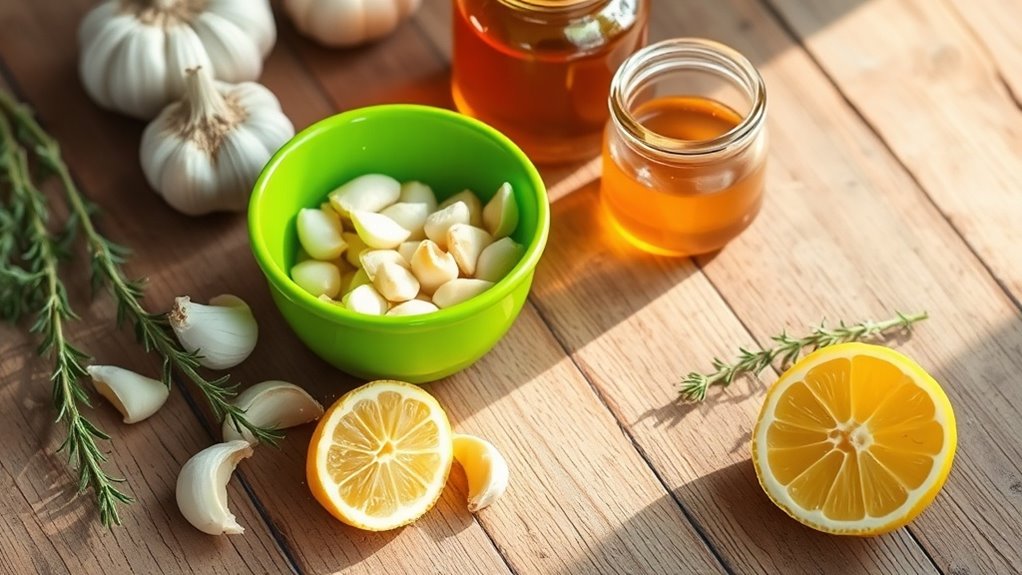
Garlic has long been recognized for its myriad health benefits, including its effectiveness against fungal infections. To make a garlic paste, crush a few cloves and mix with a small amount of water. Apply the paste directly to the affected area, leaving it for about 30 minutes before rinsing off. Additionally, natural remedies like garlic can complement conventional treatments and aid in recovery.
| Step | Action |
|---|---|
| Step 1 | Crush garlic cloves |
| Step 2 | Add water |
| Step 3 | Apply to infection |
Apple Cider Vinegar Soak
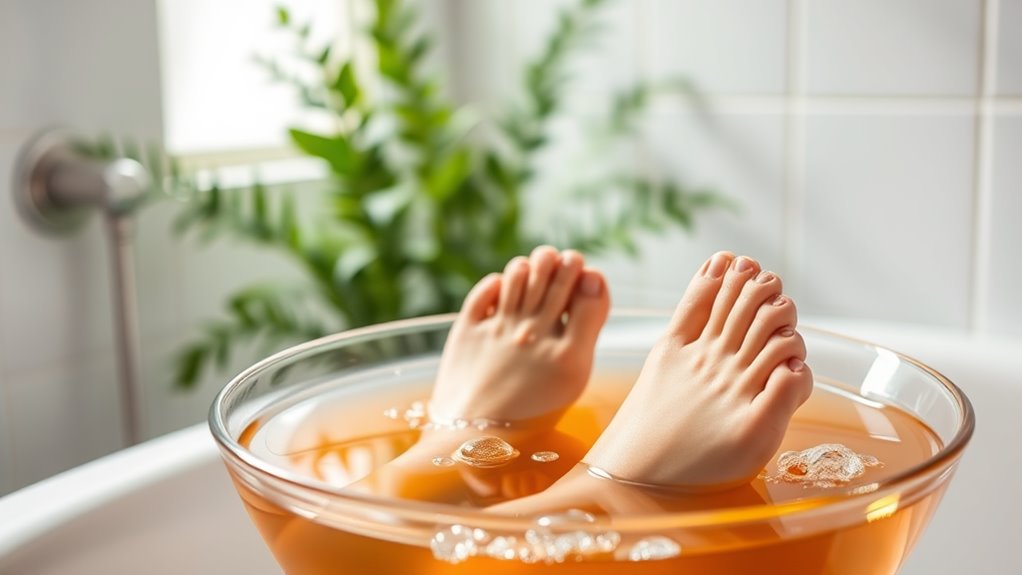
One effective method for treating fungal infections is an apple cider vinegar soak.
Mix one part apple cider vinegar with two parts warm water. Soak the affected area for 15 to 30 minutes daily. The antifungal properties of apple cider vinegar can help combat the infection while balancing your skin’s pH.
Always rinse with clean water afterward and pat dry gently.
Coconut Oil Topical Remedy
Coconut oil serves as a popular and effective topical remedy for fungal infections due to its natural antifungal properties. You can apply it directly to the affected area several times a day. Here’s a quick reference table to help you understand its benefits:
| Benefits | Application |
|---|---|
| Antifungal | Direct application |
| Moisturizing | Prevents skin cracking |
| Soothing | Reduces irritation |
| Nourishing | Promotes healing |
| Versatile | Use on various areas |
Baking Soda Exfoliation
After exploring the benefits of coconut oil, it’s important to contemplate how baking soda can aid in managing fungal infections.
Baking soda acts as a gentle exfoliant, removing dead skin cells and helping to restore the skin’s pH balance.
To use, mix baking soda with water to form a paste, apply it to the affected area, and rinse after a few minutes.